You’re never too old or experienced to learn something new.
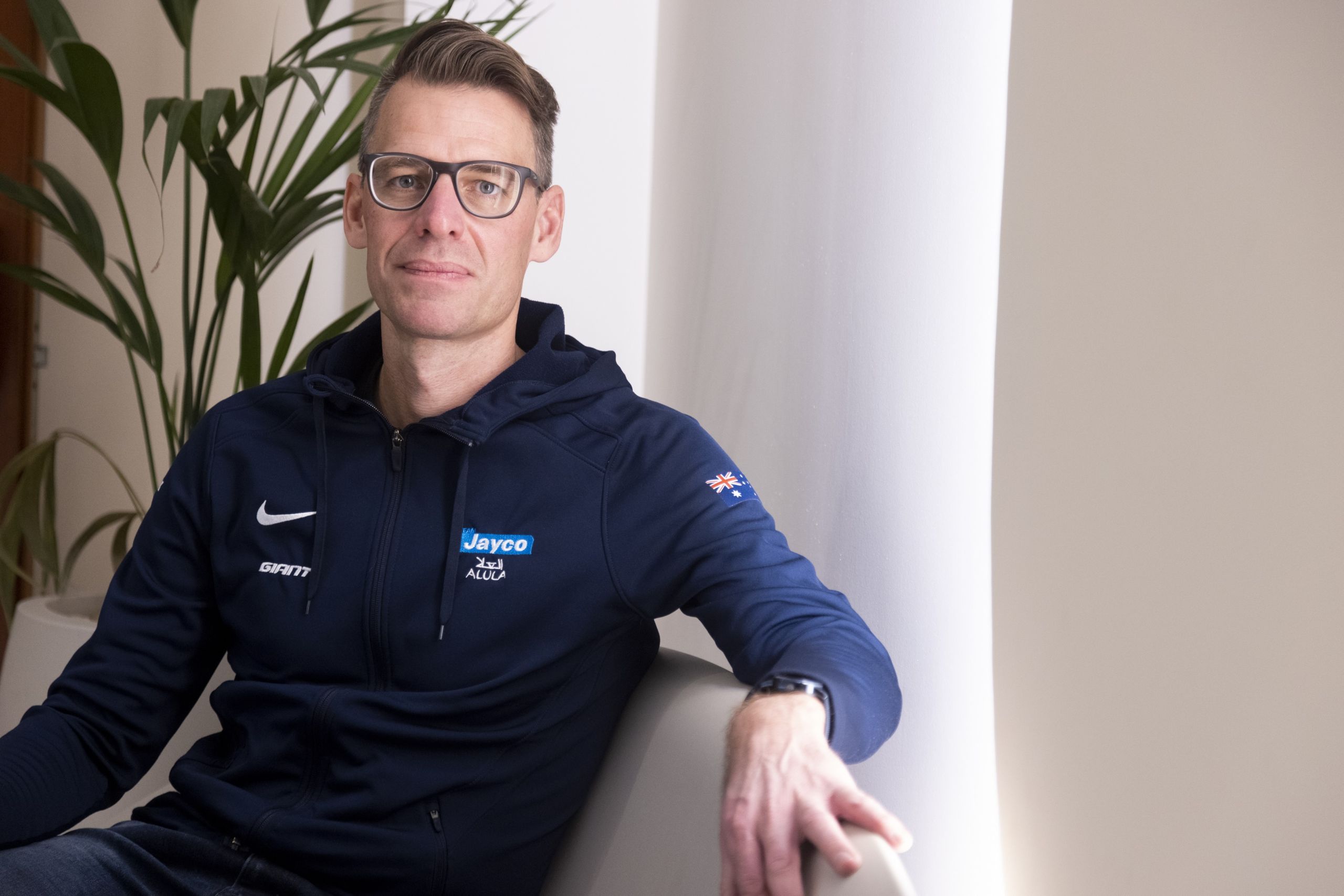
Whether you’re an elite WorldTour cyclist, their coach, or someone picking up a new hobby for the first time. Christian Schrot is taking this approach into his new role as a coach with GreenEDGE Cycling.
The German – who has a PhD in sport science and has been coaching professionally for close to two decades – will be working with riders from across the spectrum with Team Jayco AlUla, from the well-versed top-tier pro to some of the squad’s debutantes.
“The person who says ‘I know everything’ it’s just not true. You’re getting older, but you’re getting more experience. Becoming an expert is a process and once you’re an expert you can still learn so much more because coaching such a huge field and there’s always so many new aspects coming,” Schrot says.
“Cycling has lots of different areas that you can work on and it’s not a single dimension. There are a lot of topics that you can work on, even if you’re more experienced.”
Schrot has been passionate about cycling since he was around 10 years old after going out riding with his cousin, who had just bought a new bike. He raced as an amateur and had ambitions of going to the Olympic Games, but when the rules changed so that only professionals could race in the event, he decided to focus on university instead.
The starting point
Since then, he got degrees in sport science and economics, before deciding to become involved in a research project around sporting performance and training adaptation, later gaining his PhD. Throughout his long career, he’s worked with a lot of riders and there’s always a detailed “getting to know you” phase before delving into the nuts and bolts of training plans.
“The starting point is always trying to figure out the metabolism of the rider and what are their internal adjustments, which is related to their genetics and previous training. Then it’s about understanding the needs for the races they’re planning, and the role they have in the team, whether they’re a GC leader, support rider, or sprinter,” he explains.
“After that, you can start asking yourself questions, like what kind of training methods would make sense to achieve the goals, does it make sense to add strength training, where are weak points from the previous seasons? For example, the rider may have been injured previously, maybe there are issues to be solved. I also involve my other colleagues from the medical and physical side, and when you have all of that then you have a good starting point.”

Coaching a rider, no matter their experience on the bike, is not just about the raw data and training programmes. There is the human side, too.
“The relationship between coach and rider, from a motivational perspective, is important to keep the rider on track and to give them confidence along the way,” Schrot says. “Even when there are setbacks or moments where the rider might say that they are not where they need to be. It’s a process; it’s not that you can go from 0 to 100. This is a crucial part.”
Rider development
Much of Schrot’s experience in cycling has been centred around scouting young talent and then developing them. Many of the riders that he’s scouted and coached have made the step up to the UCI WorldTour and had successful careers at the top level, including Team Jayco AlUla rider Felix Engelhardt.
For Schrot, there are a few key ways of spotting burgeoning talent and then finding out just where their limits may lie.
“There are two ways of finding talent. The UCI racing scene is mostly where teams search for riders but there are also off-topic events and other endurance-based sports that have similar needs from the physiological side, such as cross-country skiing, that could work if the person has a big affinity for cycling. There are examples of riders in the WorldTour where this has worked out well,” he says.
“One side is having the physiological capacity to be able to reach the highest level. Does the rider bring a certain physiology so that with good coaching, treatment, nutrition and with longer development, and so on, they would be able to reach the top level? The other point is, how much has the rider already invested to be at the point they are. Some riders can compete with the best but they haven’t had structured training, and only started a few years ago. Meanwhile, some already have the full programme. It’s also important to take that into consideration.
“Another point, which is also really an important one because it is a team sport, where you are on the road a lot as a team is the personality of the rider. How do they cope with stress, and how do they cope under pressure?”
Alongside his role as a coach for several riders within the Team Jayco AlUla WorldTeam, Schrot will also be a point of contact for the Hagens Berman Jayco U23 squad. The team run by Axel Merckx will become the official development squad for the Australian men’s outfit from 2025 and Schrot will be on hand to give guidance to their staff, if needed, and track the progress of the young riders throughout the season.
Having a development team for both the men’s and women’s squads has been an important part of the growth of the GreenEDGE Cycling family. For Schrot, it gives young riders an environment where they can flourish at their own pace.
“Sometimes the riders are in a rush to develop, and short-term success is higher rated than long-term success, but this shouldn’t be the case,” he says. “I would recommend to the young talent that they take the time they need and focus on the important steps for their physiological development, as well as from a character and personality side, and spend time at the U23 level to fully grow up before they jump into WorldTour racing. That’s why I think it’s important for a WorldTour team to have its own U23 structure to be able to develop as fast as needed but also as slow as possible. You need a good balance between making them ready and giving them the time they need.
“I coached Felix Engelhardt for six years before he joined Team Jayco AlUla. For him, it was the same. He needed the time to develop and to make the steps to improve his aerobic capacities to get to his full potential. When he was ready, he was able to make the jump, and in his first season at WorldTour level, he was able to take some nice victories and get some results. It’s a valuable step to build a career.”