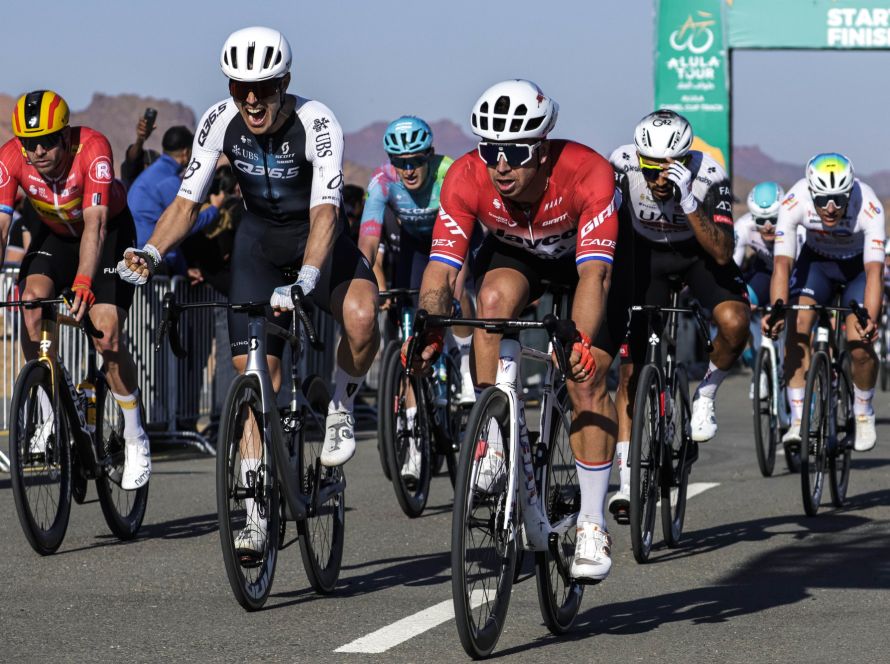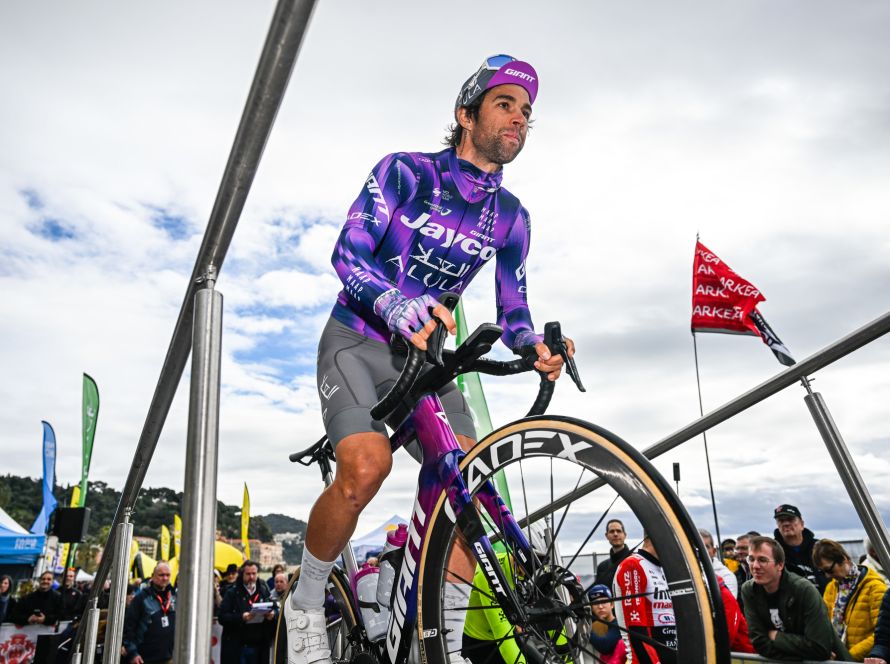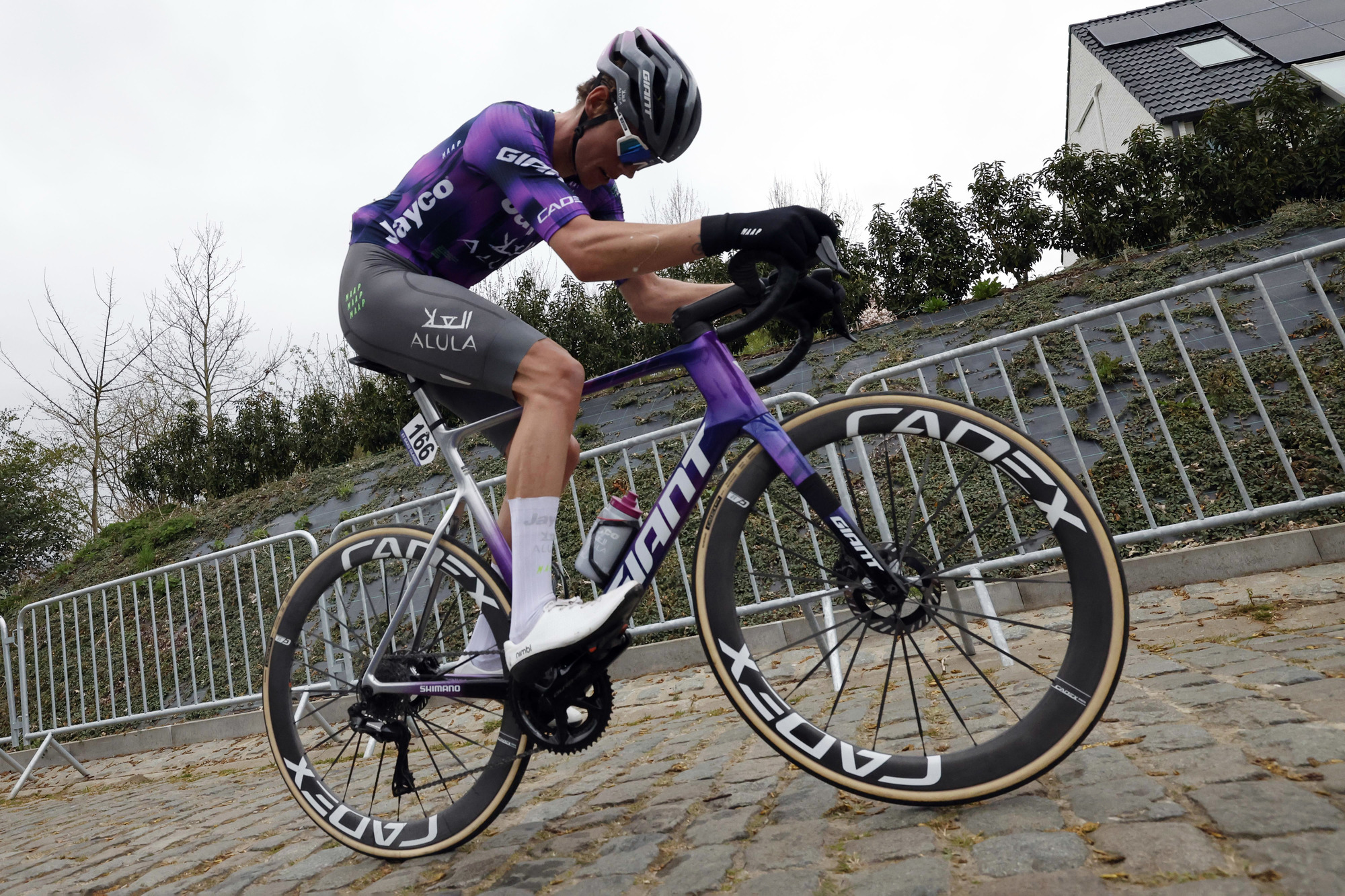
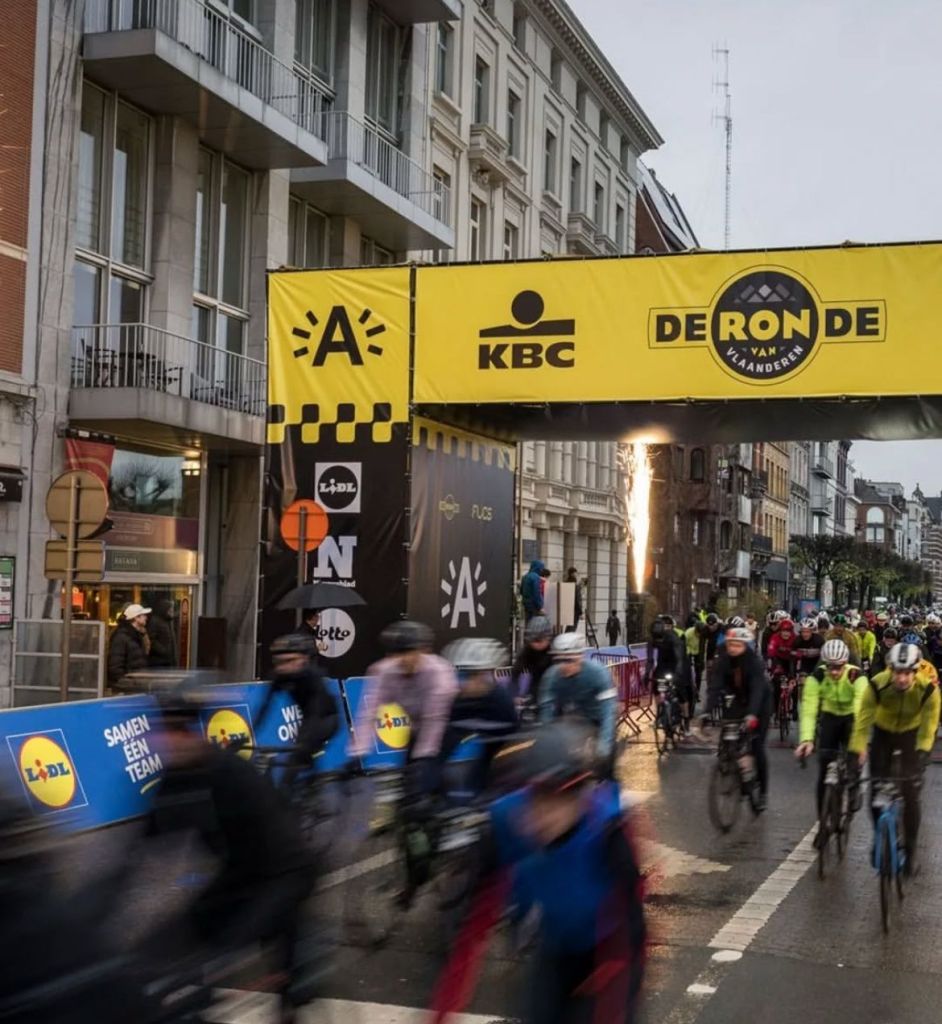
What if I have a hunger knock on the Koppenberg? Is a bar or a gel better? But how do the pro riders do it? It is easy to imagine that some of the 16,000 cyclists who will be at the start of the “We ride Flanders 2025” on Saturday will ask themselves these questions.
This army of two-wheel enthusiasts, who can choose from four different routes, the longest of which is 229km. It’s a considerable distance for those who pedal for passion and not for work. To arrive tired but happy at the finish line in Oudenaarde you need good training, a tidy bike, and to have eaten enough. But how?
800 calories per hour
The Tour of Flanders route is unique. On Sunday, the pro riders will cover almost 270 kilometres with an altitude gain of almost 2,300 meters. It’s a very demanding race where the Flemish “hellingen” often make the difference.
“A rider, on average consumes more or less 7,000 calories, more or less 1,000-1,100 calories per hour. For an amateur we can estimate an hourly consumption of 800 calories,” explains Laura Martinelli, GreenEDGE Cycling’s Lead Performance Nutritionist.
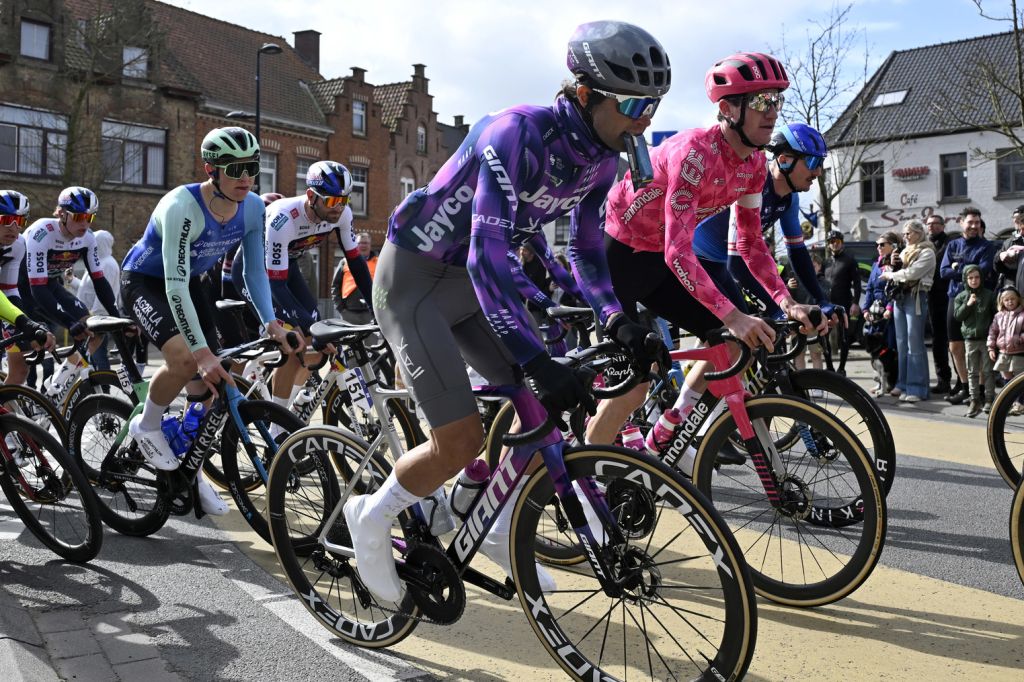
In general, those who are more trained will have a better metabolic efficiency and, with the same power produced, a lower consumption. “It’s also not to be underestimated how a good position on the bike helps to consume less,” Martinelli says. “The athletic form of the professional is almost perfect, and this often does not apply to the amateur.”
Breakfast is crucial
Pasta, boiled basmati rice, bananas, avocados, red fruits, and then lean meat, omelettes, fresh bread, crepes or pancakes and so on. These foods are never missing from the breakfast buffet of a professional team.
“Breakfast before Flanders is the same as for other races, though the quantity increases a little given its length,” Martinelli emphasises. Ideally, the idea is to eat three and a half hours before the start and start taking in a certain amount of carbohydrates at least 48 hours before.
“For Flanders, the riders start with 110-120 grams of pasta or rice (or even oats) on Friday for lunch and dinner, then increase to 150-160 grams for meals the day before and for breakfast before the race.”
The advice for the amateur is not to gorge on carbohydrates in the hours before the start, but rather to extend the time window in which you increase the portions of carbohydrates in order to obtain an effective increase in glycogen – which are the carbohydrate reserves – without weighing down the belly. Last-minute experiments should absolutely be avoided!
“If I can give you some advice, don’t try new foods at least two days before the race,” she highlights, “your body is at the limit, and it doesn’t take much to ruin your day.”
Solid, liquid or gummy?
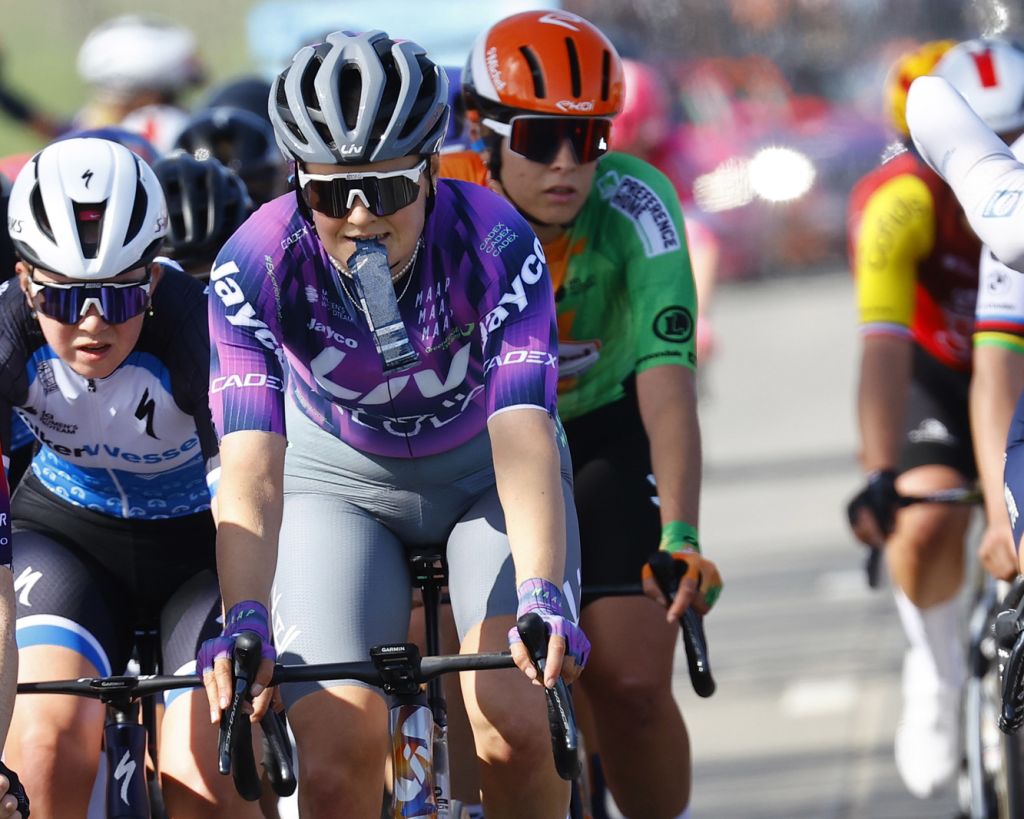
Many riders put the traditional sandwiches with ham or jam in their jersey pockets, but in general, solid foods are used much less.
“In the last four years,” explains Martinelli, “the approach to nutrition in a race has changed. Before, we preferred to alternate solids with gels, but now that’s no longer the case. In a race, you take gels for 2/3 and the remaining 1/3 the athlete consumes gummy bars.”
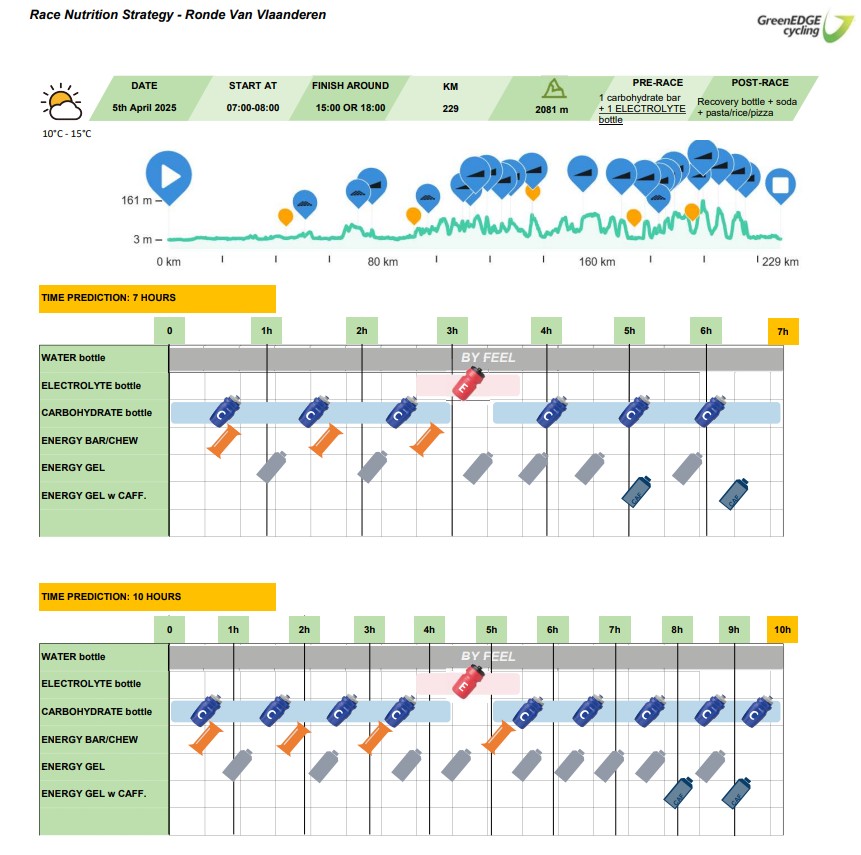
Solid foods, such as the timeless banana or a bar, are recommended only before the start. Hydration is also essential. In the two bottle cages, there must always be a bottle with water and one with powdered carbohydrates. A good rule is to drink a bottle of “carbo” every hour, while for water it’s best to go by personal feeling.
“The temperature in Flanders is never excessive, so the risk of dehydration is relative. It’s better to aim to have the right energy support to avoid running out of glycogen reserves.” For amateurs, the advice is not to skip the refreshment point – there are five on the long route – take only water and add your own carbohydrates to your water bottle.
Beware of the Flemish hellingen
The charm of the Tour of Flanders is the deadly cocktail of long distance (269km) to which are added, in the second part of the race, the infamous Flemish hellingen, climbs that are not long but steep and often on cobblestones. Needless to say, each climb is really impactful from a nutritional point of view.
Especially in the final part, there are two main risks: cramps and a lack of sugar. When the body is at the limit, one of the consequences is that the muscles are no longer able to contract, and the cramp starts.
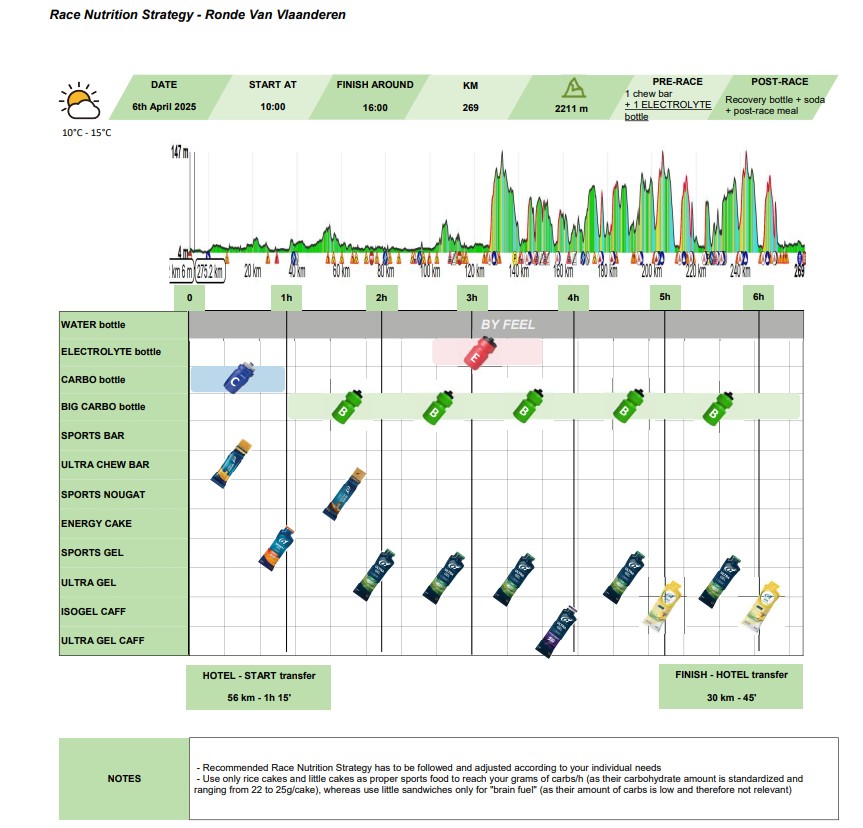
“In these cases, riders take caffeine gels that help them prevent it, but you have to be careful. If you take too much, the athlete ‘feels’ less fatigue and the danger is that of overdoing it and soon finding yourself without energy.” Each hill faced has a major impact on the level of the glycogen tank with consequences also on a psychological level.
“The problem is not just the drop in sugar levels, but how our brain interprets it,” explains Martinelli. “When glycogen suddenly drops due to intense effort, the brain reacts by sending a danger signal, almost as if to say ‘stop’.”
The professional rider is prepared, knows how to eat and therefore the risk is lower, while for the amateur it is more likely also because, in general, they are not familiar with and do not eat large quantities of carbohydrates. Consequently, when during the race, he/she increases the quantities, the body does not know how to manage and use them correctly.
Eating too much or too little
If the secret is to maintain the right nutritional balance, it is still easy to fall into the two opposites: too much or too little. Even pro riders can take in more than they need, with serious consequences. Over-fuelling is a real risk.
“If I take in too many foods in the form of gels,” Martinelli points out, “I risk exceeding my gastrointestinal absorption capacity. In simple terms, too many carbohydrates in the intestine attract water by osmosis and the end result is unfortunately predictable: diarrhoea.”
On the other hand, if you eat too little, the situation remains difficult. The first thing is to try to understand that you are about to suffer a hunger knock, also known as bonking, but it is usually too late. Experience helps a lot in these cases. The strategy that professionals follow is to prevent the crisis and therefore to take carbohydrates regularly.
For the enthusiast, it is perhaps more difficult to read the moment and therefore to avoid the “game over” moment and reach the finish line, it is advisable to take carbohydrates as quickly as possible. “When you go into a hunger crisis,” says Martinelli, “it means that you have run out of supplies and therefore it is as if you had to put petrol in the tank in real time. I would try with three gels in 20 minutes with two to three sips of water or drink a sugary drink.”
For this reason, it is always better to bring a few more gels, and larger in size, to take your hands off the handlebars less.
Safe and sound at the finish, but it’s not over
Pizza and beer in Oudenaarde are more than deserved. Both for pro riders and amateurs. The post-race is important and, even at this time, it is better to favour carbohydrates over proteins and o replenish lost fluids.
Normally, a professional takes a day to recover from the fatigue of the race, things are different for an amateur. In the following two or three days, leg pain and general soreness are frequent. The advice is to rest, drink a lot (water, of course, and not one of the many Belgian beers available) and take specific supplements. Also pay attention to the open window of infections.
“It is scientifically proven that in the two weeks following such a major effort the risk of getting sick is very high due to the weakening of the immune system,” Martinelli says. In this case, our nutritionist’s advice is to eat lots of colourful fruit and vegetables and to choose fatty foods such as, for example, salmon.
Good luck to all the participants taking part this year!
Photos: Sprint Cycling